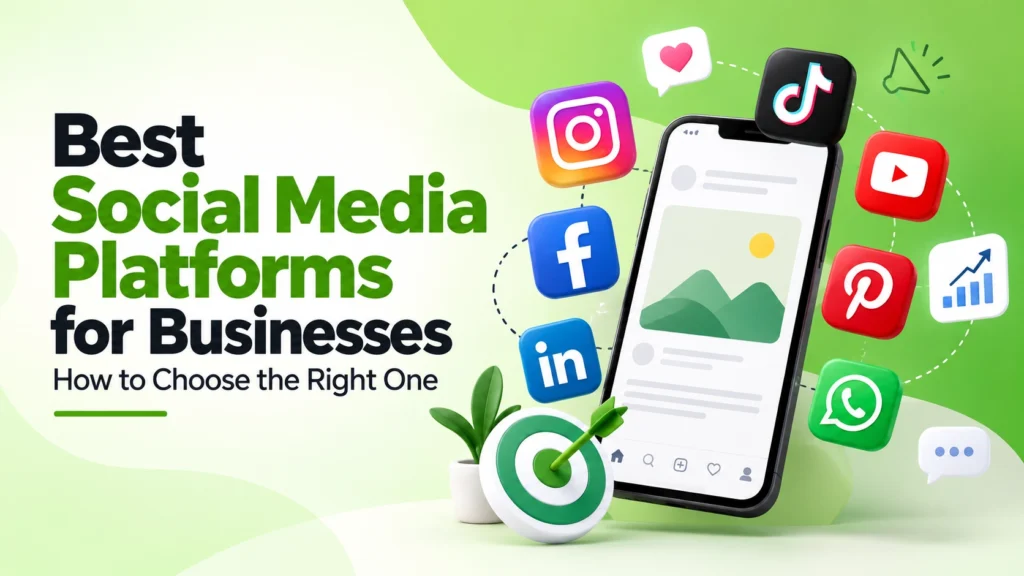
Best Social Media Platforms for Businesses: How to Choose the Right One
Choosing the right social media platforms can help your business reach the right audience, build brand awareness, and generate quality leads. However, being active on every platform isn’t necessary. The best approach is to focus on the channels that align with your business goals, target audience, and content strategy.
In this guide, we’ll explore the leading social media platforms for businesses and explain how to choose the right ones for your brand.
Success on social media isn’t about being everywhere—it’s about being where your audience is, sharing content that matters, and building relationships that turn attention into trust.
Why Choosing the Right Social Media Platform Matters
Every social media platform has a different audience, content format, and purpose. Selecting the right channels helps you use your time and marketing budget more effectively.
A well-planned social media strategy can help your business:
- Reach potential customers more effectively.
- Build brand awareness and credibility.
- Share useful content and engage with your audience.
- Generate enquiries, website visits, and sales.
- Build long-term customer relationships.
The goal isn’t to collect followers everywhere. It’s to reach the people most likely to value your products or services.
1. Instagram: Visual Storytelling and Brand Awareness
Instagram is useful for businesses that can communicate through photos, short videos, Reels, Stories, and other visual content.
Best for: Lifestyle brands, fashion, food, beauty, hospitality, creators, and visually driven service businesses.
Content ideas:
- Reels showing your services or process.
- Customer testimonials and project highlights.
- Behind-the-scenes videos.
- Educational carousels and quick tips.
- Stories featuring questions, polls, and updates.
Tip: Use a consistent visual identity and publish content that provides value rather than relying entirely on promotional posts.
2. Facebook: Community Building and Local Reach
Facebook can help businesses connect with local audiences, maintain a business presence, share updates, and run targeted advertising campaigns.
Best for: Local businesses, community-focused brands, service providers, events, and businesses targeting a broad adult audience.
Content ideas:
- Business updates and offers.
- Customer reviews and success stories.
- Local events and community posts.
- Helpful videos and articles.
- Campaigns designed to generate enquiries.
Tip: Keep your business information accurate, respond to messages, and use clear calls to action.
3. LinkedIn: Professional Networking and B2B Marketing
LinkedIn is especially valuable for businesses selling to other businesses, professional service providers, recruiters, and companies seeking industry credibility.
Best for: B2B companies, consultants, agencies, technology businesses, and professional services.
Content ideas:
- Industry insights and practical advice.
- Case studies and measurable project outcomes.
- Expert opinions from team members.
- Company milestones and announcements.
- Educational posts addressing customer challenges.
Tip: Focus on expertise, useful insights, and relationships instead of treating every post as a sales pitch.
4. YouTube: Educational Videos and Long-Term Discovery
YouTube is a strong option for businesses that can explain complex topics, demonstrate products, or educate potential customers through video.
Best for: Education, technology, tutorials, product demonstrations, professional services, and brands with useful stories to tell.
Content ideas:
- How-to videos and tutorials.
- Product or service demonstrations.
- Frequently asked questions.
- Customer stories and case studies.
- Short educational videos using YouTube Shorts.
Tip: Create videos around real customer questions. Use clear titles, useful thumbnails, and accurate descriptions to help viewers understand what they’ll learn.
5. TikTok: Short-Form Video and Discovery
TikTok can help brands reach audiences through entertaining, educational, and relatable short-form videos. Its suitability depends on your audience, market, and ability to produce native-feeling content.
Best for: Consumer brands, creators, lifestyle businesses, entertainment, and businesses comfortable with short-form video.
Content ideas:
- Quick tips and demonstrations.
- Behind-the-scenes moments.
- Common mistakes and solutions.
- Product demonstrations.
- Responses to relevant audience questions.
Tip: Prioritise a strong opening, clear storytelling, and authenticity. Avoid copying trends that don’t fit your brand.
6. WhatsApp: Customer Communication and Enquiries
WhatsApp Business can support direct communication with customers, especially for businesses that receive enquiries, appointments, and order questions.
Best for: Local services, retailers, appointment-based businesses, and businesses that rely on direct customer conversations.
Ways to use it:
- Respond to customer enquiries.
- Share product or service information.
- Send appropriate updates to customers who have agreed to receive them.
- Organise conversations using business tools.
- Make it easier for customers to ask questions before purchasing.
Tip: Respect customer consent and privacy. Avoid unsolicited bulk messages and make communication useful and relevant.
7. Pinterest: Visual Inspiration and Website Traffic
Pinterest can help people discover visual ideas, products, and resources they may want to explore later. It can be particularly useful for businesses with searchable, evergreen visual content.
Best for: Home décor, design, fashion, weddings, food, crafts, and visually focused products or services.
Content ideas:
- Step-by-step guides.
- Product inspiration boards.
- Infographics and checklists.
- Portfolio images.
- Pins linking to relevant website articles or service pages.
Tip: Use descriptive titles and relevant keywords, and link each Pin to a useful destination on your website.
How to Choose the Right Platforms for Your Business
Before creating accounts on multiple platforms, consider these five factors.
1. Understand Your Target Audience
Identify your ideal customers, their needs, and where they look for information. Choose platforms based on audience fit rather than popularity alone.
2. Define Your Marketing Goals
Different goals require different approaches:
- Brand awareness: Instagram, Facebook, YouTube, or TikTok, depending on your audience.
- B2B leads and professional credibility: LinkedIn.
- Educational discovery: YouTube and search-friendly content.
- Direct customer communication: WhatsApp Business.
- Visual inspiration and evergreen discovery: Pinterest.
These are starting points, not fixed rules. The best channel depends on your customers and offer.
3. Match the Platform to Your Content Strengths
Choose formats your team can produce consistently. If you are strong at video, consider YouTube, Instagram Reels, or TikTok. If you create detailed professional insights, LinkedIn may be a better fit.
4. Consider Your Available Resources
Each platform requires planning, content creation, publishing, and community management. Start with one or two priority platforms and expand when you can maintain quality.
5. Measure Results and Improve
Track meaningful outcomes rather than follower counts alone. Depending on your goals, monitor engagement, website visits, qualified enquiries, leads, conversions, and cost per result.
Use the data to identify what works and improve your strategy over time.
Common Social Media Marketing Mistakes to Avoid
Avoid these common mistakes when building your social media presence:
- Trying to maintain too many platforms at once.
- Publishing the same content everywhere without adapting it.
- Posting without a clear purpose or audience.
- Ignoring comments and customer messages.
- Measuring success only through likes and followers.
- Using trends that don’t fit your brand.
- Neglecting links, landing pages, and conversion tracking.
A focused, consistent strategy is usually more manageable than an inconsistent presence across every platform.
Build a Social Media Strategy That Supports Business Growth
Social media works best when it connects with your wider digital marketing strategy. Your profiles, website, content, advertising, and customer experience should communicate a consistent message.
At KlicBuzZ Digital, we help businesses develop their online presence through strategic social media marketing, social media management, content creation, and performance marketing.
Explore our Social Media Marketing services to see how a focused strategy can support your business goals.
Ready to improve your digital presence? Visit our Services page to explore solutions for your business.
Frequently Asked Questions
Which social media platform is best for a small business?
The best platform depends on your audience, industry, and goals. Instagram and Facebook may suit many consumer-facing or local businesses, while LinkedIn is often useful for B2B marketing. Start where your potential customers are most active.
How many social media platforms should a business use?
Start with one or two platforms that closely match your audience and goals. Add more when you have the resources to create suitable content and manage conversations consistently.
Is social media marketing suitable for B2B businesses?
Yes. LinkedIn can be particularly useful for professional networking, industry insights, and B2B lead generation. Other platforms can also work when they fit the audience and content strategy.
How often should a business post on social media?
There is no universal posting frequency. Choose a realistic schedule you can maintain, then evaluate content quality, audience response, and business results to refine it.
How can a business measure social media marketing success?
Measure results against your goals. Useful metrics include reach, engagement, website traffic, qualified enquiries, conversions, and return on advertising spend where applicable.