

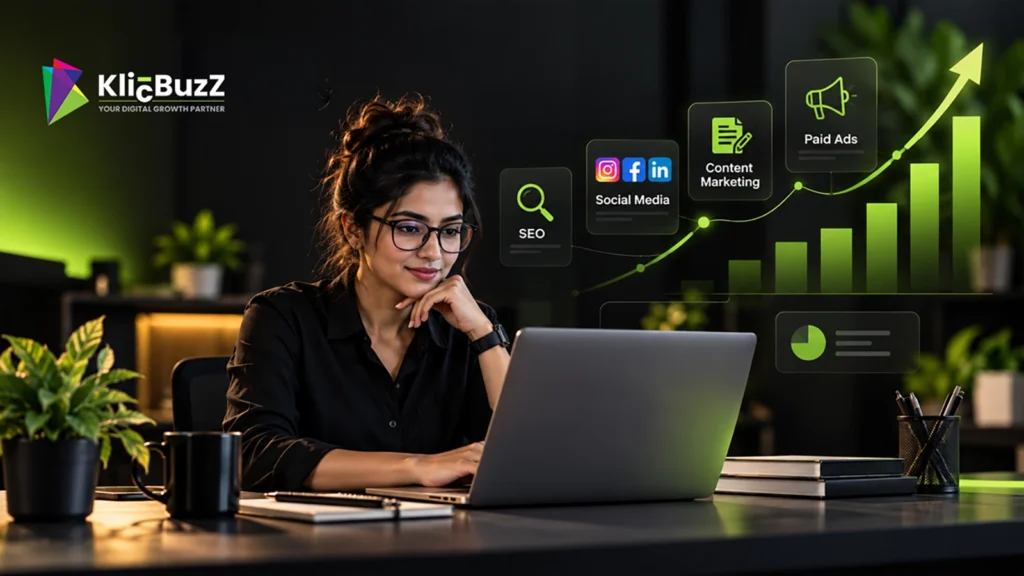
Digital Marketing for Small Businesses: A Practical Guide to Growing Online
Digital marketing helps small businesses reach potential customers, build trust, and generate enquiries online. Whether you run a local shop, offer professional services, manage an educational institute, or operate a growing company, a clear online strategy can help people discover your business.
However, successful marketing does not require you to be active on every platform. Instead, focus on understanding your audience, choosing the right channels, and sharing useful information. By tracking results regularly, you can invest more time and money in the activities that support your business goals.
This practical guide explains how small businesses can improve their online presence, manage marketing costs, and turn relevant website traffic into meaningful business opportunities.
What Is Digital Marketing for Small Businesses?
Successful digital marketing isn’t about being everywhere—it’s about reaching the right customers with the right message and measuring what works.
Digital marketing involves promoting a business through online channels such as search engines, websites, social media, email, and paid advertising.
These channels often work together. For example, a potential customer might discover your business through Google, visit your website, review your social media profiles, and then contact your team.
A well-planned strategy makes each step easier.
The main goal is not simply to increase website visits or social media followers. More importantly, your marketing should help relevant customers understand your services, trust your business, and take action. That action might be an enquiry, a phone call, an appointment, or a purchase.
1. Build a Professional, Mobile-Friendly Website
Your website gives potential customers a place to learn about your business and evaluate your offerings. It should clearly explain what you do, whom you serve, and how visitors can contact you.
A useful business website should include:
- Clear service information: Explain your products or services in simple language.
- Mobile-friendly design: Make sure visitors can navigate pages and complete forms on smartphones.
- Fast-loading pages: Optimise images and remove unnecessary scripts where possible.
- Trust signals: Display genuine testimonials, relevant credentials, business details, and examples of your work.
- Clear calls to action: Help visitors request a quote, make a call, book an appointment, or submit an enquiry.
- Analytics: Track useful actions, such as form submissions, calls, and purchases, where measurement is available.
For instance, an interior design business could create separate pages for residential interiors, office interiors, and renovation services. Each page could explain the relevant service, showcase suitable projects, and provide a clear way to enquire.
As a result, visitors can find information that matches their needs instead of searching through one long page.
If your website needs improvement, explore KlicBuzZ Website Design services.
2. Use SEO to Attract Relevant Visitors
Search engine optimisation (SEO) helps search engines understand your website and helps potential customers discover your pages through organic search results.
SEO can be particularly useful when customers search online for specific services, products, or solutions.
Understand what your customers search for
Start by listing the questions people ask before choosing a business. For example:
- What services does a digital marketing agency offer?
- How much does website design cost?
- Which digital marketing services does my small business need?
- Where can I find a reliable service provider in Pune?
These questions can guide your website content and blog topics. Focus on the needs of your actual customers rather than repeating the same keyword across multiple pages.
Improve your important pages
Give every important page a clear purpose and a descriptive title. Use helpful headings, original content, and relevant internal links so visitors can find related information.
For service pages, explain the work involved, the problems you solve, your process, and what customers can reasonably expect.
Make your website easy to discover
Check that search engines can access your important pages. Use appropriate canonical URLs and submit your XML sitemap through Google Search Console.
You should also review indexing reports to identify technical problems that could prevent important pages from appearing in search results.
SEO takes time, and rankings are never guaranteed. Therefore, monitor search impressions, clicks, relevant queries, and enquiries to understand whether your work is improving visibility and business outcomes.
Learn more about KlicBuzZ SEO & Analytics services.
3. Strengthen Your Local Online Presence
If your business serves a specific city or neighbourhood, local SEO can help nearby customers discover your services.
For eligible businesses, a well-maintained Google Business Profile is a useful starting point. Keep your business details, opening hours, contact information, and service descriptions accurate.
You can also improve your local presence by:
- Selecting relevant business categories.
- Uploading genuine, recent photographs.
- Keeping important business listings consistent.
- Asking customers for honest reviews without offering rewards for positive ratings.
- Responding professionally to reviews and questions.
- Publishing useful information about the areas you genuinely serve.
For example, a business serving Pune customers can explain its services and service area on its website. Mention locations where they are relevant rather than adding city names unnaturally throughout the content.
Local search visibility depends on several factors, including relevance, distance, and prominence. Consequently, no business can guarantee a particular local ranking.
4. Choose the Right Social Media Platforms
Social media helps businesses introduce their offerings, share useful information, and maintain relationships with customers.
The best platform depends on your audience, industry, resources, and marketing objectives.
- Instagram: Useful for visual products, creative work, short videos, and behind-the-scenes content.
- Facebook: Can help businesses share updates, build local communities, and reach selected audiences through advertising.
- LinkedIn: Often suitable for professional services, B2B marketing, business networking, and recruitment.
- YouTube: Useful for tutorials, product demonstrations, and detailed educational videos.
You do not need to publish everywhere. Instead, start with one or two platforms where your audience is active and where you can consistently create useful content.
A manageable weekly schedule might include an educational post, an answer to a common question, an example of your work, and a post addressing a customer concern.
Over time, review which posts generate meaningful engagement, website visits, and qualified enquiries. These outcomes are generally more useful than follower counts alone.
Explore KlicBuzZ Social Media Marketing and Social Media Management to learn more.
5. Create Helpful Content That Builds Trust
Content marketing helps potential customers learn about a topic before deciding whether to buy from you.
Depending on your business, useful content might include blog articles, practical guides, videos, project explanations, FAQs, checklists, and social media posts.
The most effective content answers a real question or helps readers make a decision.
For example:
- A dentist could explain what patients should know before a routine appointment.
- A property consultant could share questions buyers should ask before selecting a property.
- A software company could compare solutions to a common business problem.
- A digital marketing agency could explain how to measure website enquiries and advertising performance.
Use your experience to make the advice relevant. Additionally, verify factual claims and provide enough detail to help readers understand the subject.
Avoid publishing many similar articles simply to target slightly different keywords. A smaller collection of genuinely useful resources can serve readers better than repetitive content.
You can also reuse a detailed article by turning its key points into social media posts, a video outline, or an email newsletter.
Explore KlicBuzZ Content Creation services for support with content planning and production.
6. Consider Paid Advertising for Targeted Reach
Search and social media advertising can help businesses reach selected audiences while organic visibility develops. However, advertising needs a clear objective, a suitable offer, and ongoing measurement.
Before launching a campaign, follow these steps:
- Set a clear goal. Decide whether you want qualified leads, purchases, bookings, or another measurable outcome.
- Define your audience. Consider location, search intent, relevant interests, and customer needs.
- Choose a suitable channel. Search ads can reach people actively looking for a solution, while social ads can introduce an offer to a relevant audience.
- Create a relevant landing page. Match the page to the advertisement and make the next step clear.
- Set a controlled budget. Start with an amount your business can afford to test.
- Measure performance. Track conversions, cost per qualified lead, and sales or revenue where possible.
For instance, a business offering a specialised service could test search ads for relevant high-intent queries. The next step is to review whether the resulting enquiries are suitable and commercially worthwhile.
Paid advertising does not guarantee sales. Instead, assess the results in context, including competition, targeting, offer quality, landing-page experience, and follow-up.
Learn more about KlicBuzZ Performance Marketing.
7. Use Email Marketing to Maintain Customer Relationships
Email marketing helps businesses stay connected with people who have chosen to receive updates.
Depending on your business, useful emails might include educational newsletters, product updates, appointment reminders, relevant offers, and post-purchase follow-ups.
To make your email marketing more effective:
- Collect email addresses through clear, permission-based methods.
- Explain what subscribers can expect to receive.
- Share relevant information instead of sending messages without a clear purpose.
- Write descriptive subject lines.
- Include a useful next step where appropriate.
- Provide an easy way to unsubscribe.
For example, a training institute could send prospective students a helpful course guide followed by updates about course schedules, provided those recipients have agreed to receive them.
Measure meaningful results such as clicks, registrations, purchases, and unsubscribes. Always respect applicable privacy and marketing requirements.
8. Build Trust Through Reviews and Consistent Branding
Customers often compare several businesses before making a decision. Consistent branding and genuine customer feedback can help explain what makes your business different.
Start by using consistent business information, visual elements, messaging, and service descriptions across your website and marketing channels.
Customer reviews can also provide useful social proof. Encourage honest feedback after genuine interactions, respond constructively to concerns, and avoid fabricated reviews or misleading testimonials.
In addition, show real examples of your work and explain your process clearly. This helps potential customers understand your experience without relying on unsupported claims.
If your visual identity or messaging needs improvement, explore KlicBuzZ Branding & Identity services.
9. Create a Practical Digital Marketing Budget
There is no single marketing budget that works for every small business. The right allocation depends on your goals, competition, sales cycle, and available resources.
Consider these common cost areas:
| Activity | What to budget for |
|---|---|
| Website | Design, development, hosting, and maintenance |
| SEO | Research, content improvements, and technical work |
| Social media | Content production, creative assets, and management |
| Paid advertising | Advertising spend, campaign management, and landing pages |
| Email marketing | Tools, content, and campaign management |
| Measurement | Analytics setup, conversion tracking, and reporting |
Keep advertising spend separate from service fees and other marketing costs. This makes it easier to evaluate the full cost of each channel.
If your budget is limited, begin with the essentials: a clear website, accurate business information, useful service pages, and basic measurement. Then test additional channels based on customer demand and observed results.
Most importantly, avoid spreading your budget across too many activities before you understand which ones support your business goals.
10. Measure Results and Improve Your Strategy
Digital marketing should be reviewed regularly. The right metrics depend on what you want your business to achieve.
Useful measurements include:
- Organic search: Impressions, clicks, and relevant queries in Google Search Console.
- Website performance: Important page activity and completed conversion actions.
- Paid advertising: Spend, conversions, and cost per qualified lead.
- Social media: Relevant engagement, website visits, and enquiries.
- Sales: Qualified leads, conversion rate, customer acquisition cost, and revenue where tracking is available.
Before making major changes, establish a baseline. Then review results over an appropriate period, taking seasonality, sales cycles, and available data into account.
For example, a campaign might attract many visitors but generate few enquiries. In that case, examine the audience, offer, landing page, and conversion process to identify possible improvements.
Similarly, if a blog attracts relevant search traffic, make sure readers can easily find related services or take the next step.
Use evidence to guide your decisions rather than assuming that more traffic always means more business.
A Practical 30-Day Digital Marketing Plan for Small Businesses
You can start improving your online presence with a manageable plan. Focus on the essentials first, then build on what you learn.
1: Establish the basics
- Review your website and make contact information easy to find.
- Identify your main customer groups and most important services.
- Check your Google Business Profile if your business is eligible.
- Set up or review website analytics and conversion tracking.
2: Improve search visibility
- Research the questions customers ask before buying.
- Improve your most important service pages.
- Review page titles, headings, internal links, and indexing.
- Choose a useful blog topic that addresses a specific customer problem.
3: Publish and promote useful content
- Publish or improve one substantial, helpful article.
- Share relevant excerpts on suitable social media platforms.
- Link the article to related service pages.
- Check that visitors can easily contact you or take the next step.
4: Review and refine
- Review search visibility, website activity, and enquiries.
- Identify the content and channels that attracted relevant prospects.
- Find the biggest obstacle to generating more qualified leads.
- Decide what to improve or test during the following month.
This plan provides a starting point, not a guarantee of results. Continue improving the activities that best support your business objectives.
Frequently Asked Questions
Which digital marketing strategy is best for a small business?
The best approach depends on your customers and goals. Local service businesses may benefit from local SEO and a useful website, while businesses with visual products may find social media effective. Paid advertising can help test demand when the offer and conversion process are ready.
Can a small business do digital marketing with a limited budget?
Yes. Start with accurate business information, a useful website, relevant content, and consistent measurement. As your needs and budget grow, consider adding paid advertising or specialist support.
How long does digital marketing take to show results?
The timeline varies by channel, competition, budget, and implementation. Paid campaigns can generate early traffic, although profitable results are not guaranteed. SEO and content marketing generally require ongoing effort and time to build visibility.
Is a website necessary if my business already uses social media?
A website provides a central place for detailed service information, enquiries, credibility, and measurement. Social media remains useful for discovery and engagement; however, relying on it alone gives you less control over how information is organised and presented.
How can I tell whether my digital marketing is working?
Define your goals first. Then track meaningful actions such as qualified enquiries, bookings, purchases, or revenue. Use website analytics, advertising reports, and customer feedback together to evaluate performance.
Should I hire a digital marketing agency?
Specialist support may help when your business needs skills, time, or tools that are difficult to manage internally. Before choosing an agency, clarify your objectives, scope of work, reporting expectations, budget, and how success will be measured.
Final Thoughts
Digital marketing works best when the different parts of your online presence support one another. A useful website, relevant SEO, consistent social media, helpful content, targeted advertising, and reliable measurement can help small businesses improve visibility and connect with potential customers.
Start with the channels that fit your audience and resources. Measure the results, improve the customer experience, and expand your strategy as you learn.
Ready to strengthen your online presence? Explore KlicBuzZ Digital Marketing Services or contact our team to discuss your business goals.
One Response